Mission

Our Mission
The Action Alliance, a diverse group of individuals and organizations, believes that ALL people have the right to a life free of sexual and domestic violence.
We will use our diverse and collective voice to create a Virginia free from sexual and domestic violence—inspiring others to join and support values of equality, respect and shared power.
We recognize that sexual and domestic violence are linked to other forms of oppression, which disproportionately affect women, children, and marginalized people. Understanding the great harm racism has created for individuals, families and our communities in Virginia, we commit to building within the coalition an anti-racist framework from which to address sexual and domestic violence.
Guiding Principles
- As the Alliance conducts its work, it is essential that survivors, the interests of survivors, and those impacted by sexual assault and domestic violence are at the forefront of all decision-making.
- Recognizing that local agencies have been the foundation of coalition work by connecting communities and survivors to statewide advocacy, we are committed to an Alliance in which Sexual Assault Crisis Centers and Domestic Violence Programs continue to be the driving force of The Alliance.

- Recognizing the historical inequities between resources allocated to address sexual assault and domestic violence, we seek to create a change that includes an Alliance that equitably addresses the elimination of both sexual and domestic violence.
- Recognizing that sexual and domestic violence affects all Virginians, we seek to create an Alliance where those who have been traditionally oppressed in society and/or marginalized in anti-violence work have the opportunity to be full and active participants in The Alliance. The Alliance recognizes that representation of traditionally oppressed groups is only a beginning. Intentional diversity also involves an analysis of oppression and a commitment to challenging and changing the disempowering influences of dominant culture. Everyone must share responsibility for ensuring that ALL voices are heard and valued.
Further Justice Priorities
Advancing justice lives at the intersection of violence and systemic inequality. As a coalition dedicated to ending sexual and domestic violence, we center the voices and needs of survivors, particularly those most marginalized by racism, poverty, and discrimination. Our justice priorities reflect a deep commitment to transformative change, advocating for policies and practices that promote healing, accountability, and true equity. Together, we are working to build a world where safety, dignity, and justice are realities for everyone.
The Action Alliance supports full access to non-judgmental, safe, legal, affordable, and medically-accurate sexual and reproductive health care for all survivors of sexual and intimate partner violence. We support full access to prevention education and services that promote sexual and reproductive health and wellness across the lifespan, including policies that promote a trauma-informed approach to sexual and reproductive coercion and violence when it occurs and seeks to reestablish autonomy, safety, and empowerment for all survivors of violence.
Access the Reproductive Health and Justice 101 webinar here (originally aired in 2019).
Interrupting the Trauma-to-Prison Pipeline
The Trauma-to-Prison-Pipeline (aka “School-to-Prison-Pipeline”) fails young people who are experiencing high levels of toxic stress and/or trauma by responding in overly punitive ways to youth who exhibit normal reactions to trauma and toxic stress.
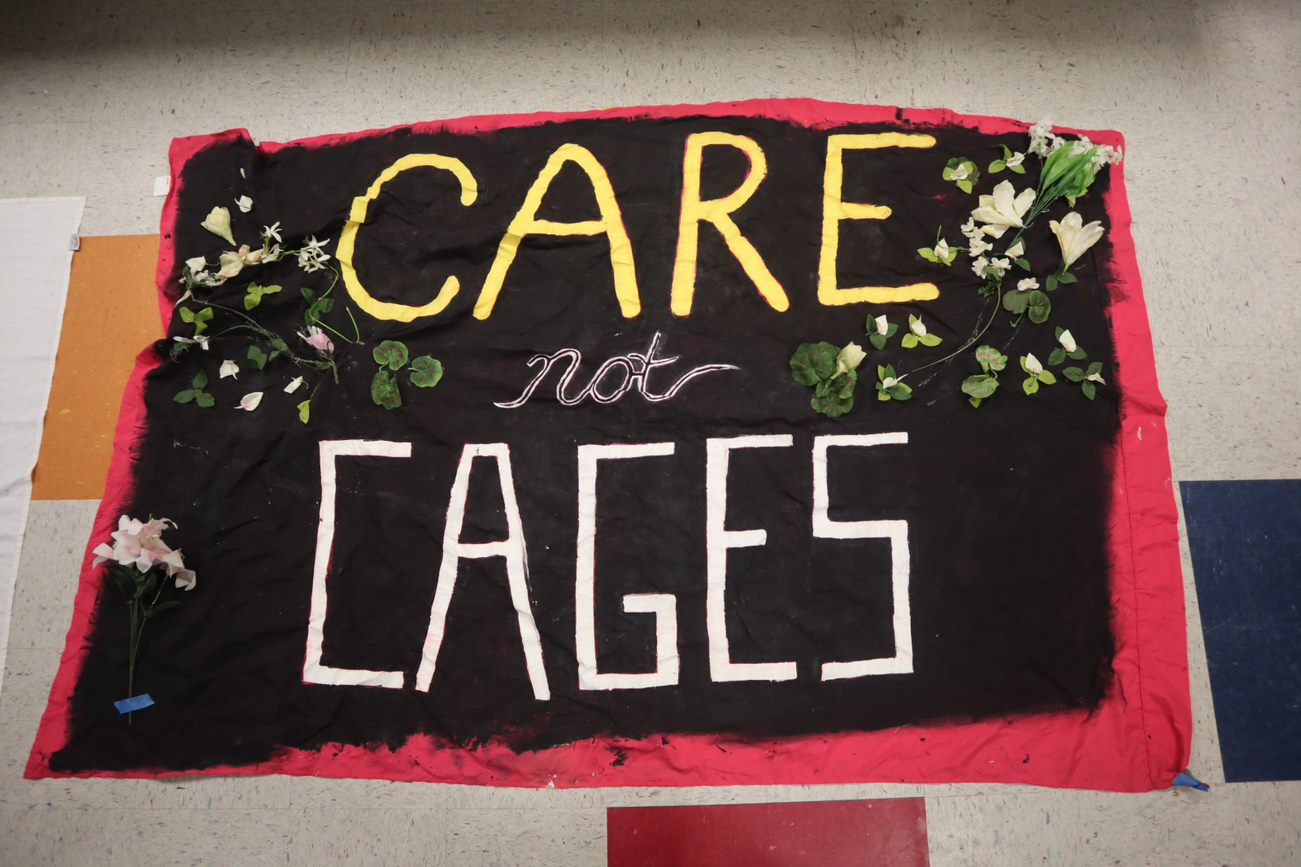
Youth of color and youth with disabilities are particularly targeted for disproportionately high levels of heavy-handed, punitive responses to vague and subjective infractions in school, such as “defiance of authority”, or “classroom disruption”. Viewed from a trauma-informed lens, these same behaviors may signal youth who are suffering and struggling with ongoing effects of trauma.
The Action Alliance believes that everyone deserves racially equitable responses that are compassionate and trauma-informed, and which build individual and community assets.
Training for Trainers: Talking to Schools about the Trauma-to-Prison Pipeline:
Our 6-hour training addresses the connections between trauma and system-involved youth, and provides participants with a brief “training in a box” to take back to deliver to their local schools and task forces to start conversations about simple steps that schools can take to significantly reduce the number of youth referred to law enforcement by responding to students in more trauma-informed ways.
Check out our training calendar to register. This training can also be offered as a Training on Request.
Supporting the Juvenile Justice Parade
The Action Alliance supports the annual Juvenile Justice Parade in Richmond with Art 180, RISE for Youth, and hundreds of other artists, activists, formerly incarcerated individuals, families, and concerned citizens to honor and celebrate the lives of youth affected by Virginia’s shameful trauma-to-prison pipeline.
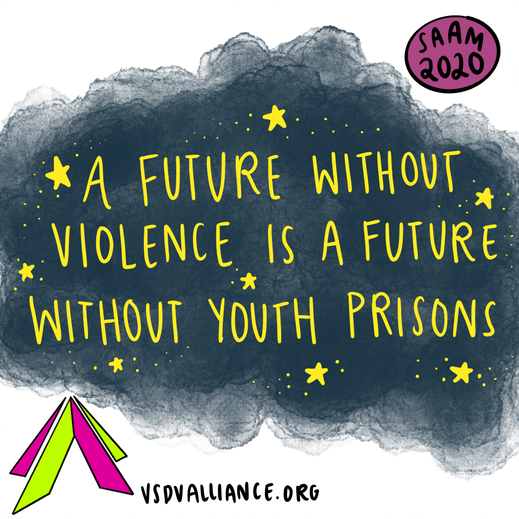
Check out this resource: “Showing Up Together: Connections between Gender-based Violence and Youth Incarceration,” a graphic pamphlet for advocates, preventionists, and people in community working to support survivors of violence and build towards a world free of violence and free of youth prisons.
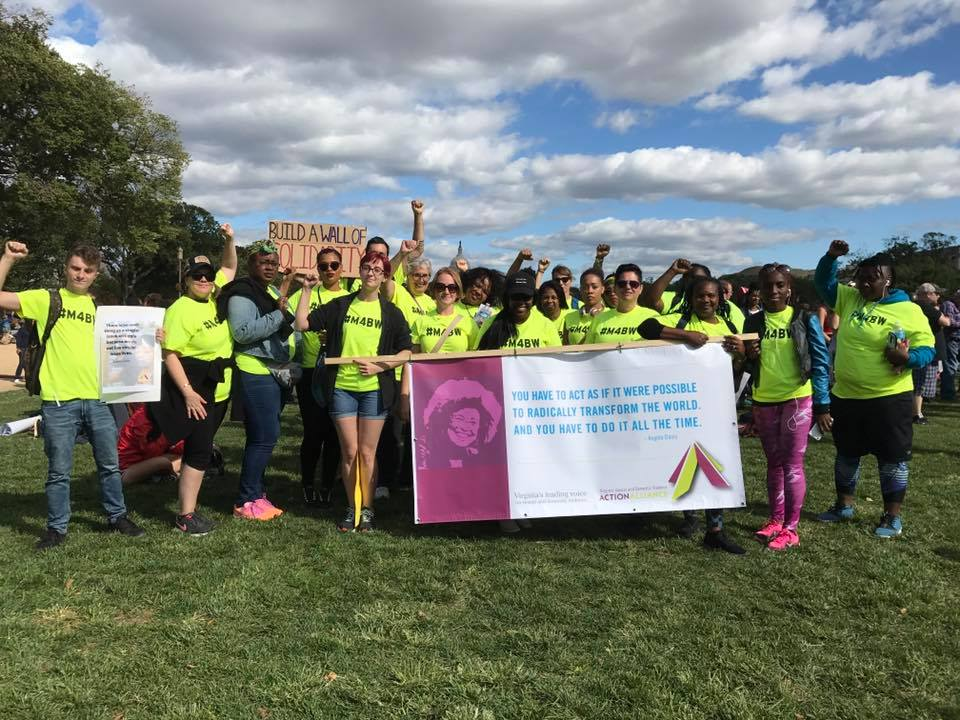
The Action Alliance has partnered with state, regional, and national community organizers and non-profit organizations to support their efforts towards racial justice and Black liberation. Below are information and images from events and campaigns we have participated in over the last few years, such as Black Mama’s Bail Out, Black Women’s Townhall, and the Marches for Black Women.
Black Mama’s Bail Out
 We support Southerners on New Ground (SONG) in raising funds to free as many Black women (broadly defined) as possible to bring them home to their families and communities for Mother’s Day through their “Black Mamas Bail Out” action.
The Black Mama’s Bail Out Action is part of a larger National Bail Out Collective of Black liberation groups, which has bailed out over 200 people in a dozen states since it launched in May 2017. National bail outs are one tactic in part of a larger strategy to build the power of local organizations to end the use of money bail and start to experiment with community-based support systems, rather than holding people in cages.
If you’d like to learn more about this movement, read our blog post.


Frameworks for Our Prevention Toolkit
The webinar “Frameworks for Our Prevention Toolkit,” which was delivered in 2019, explores connecting transformative justice, disability justice, and reproductive justice to our work. Access the recording of the webinar here.
My Transformative Justice Workbook
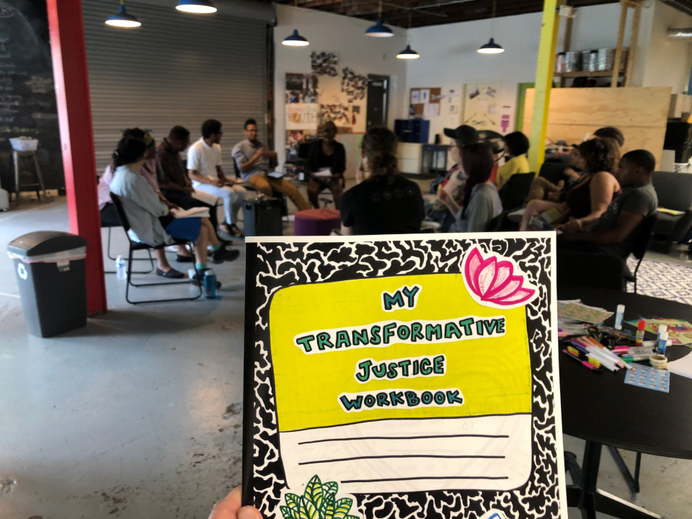
This workbook was collaboratively created by staff of the Virginia Anti-Violence Project (VAVP) and the Virginia Sexual & Domestic Violence Action Alliance (Action Alliance) after 6+ months of conversations and a desire to engage our communities around Transformative Justice and how we both respond to and prevent violence outside of state-based systems that target and criminalize people of color ( particularly black people and communities), queer and trans people, poor folks, immigrants and undocumented communities, disabled folks, and other marginalized communities.
Download the My Transformative Justice Workbook.
Advancing justice lives at the intersection of violence and systemic inequality. As a coalition dedicated to ending sexual and domestic violence, we center the voices and needs of survivors, particularly those most marginalized by racism, poverty, and discrimination. Our justice priorities reflect a deep commitment to transformative change, advocating for policies and practices that promote healing, accountability, and true equity. Together, we are working to build a world where safety, dignity, and justice are realities for everyone.The infographic “How Oppressive Systems Connect” illustrates examples of how gender-based violence is driven by white supremacy, sexism, heterosexism, and capitalism. “How Justice Movements Connect” illustrates examples of how gender justice is supported by movements to build racial justice, economic justice, trans and queer liberation, and reproductive justice.
These resources are helpful for your prevention work, new staff orientation, volunteer training, board training, and other environments where you are exploring the many ways in which work to end sexual and intimate partner violence intersects with work to build racial justice, reproductive justice, economic justice, and trans and queer liberation.
These infographics can be accessed through Community Solutions VA.

